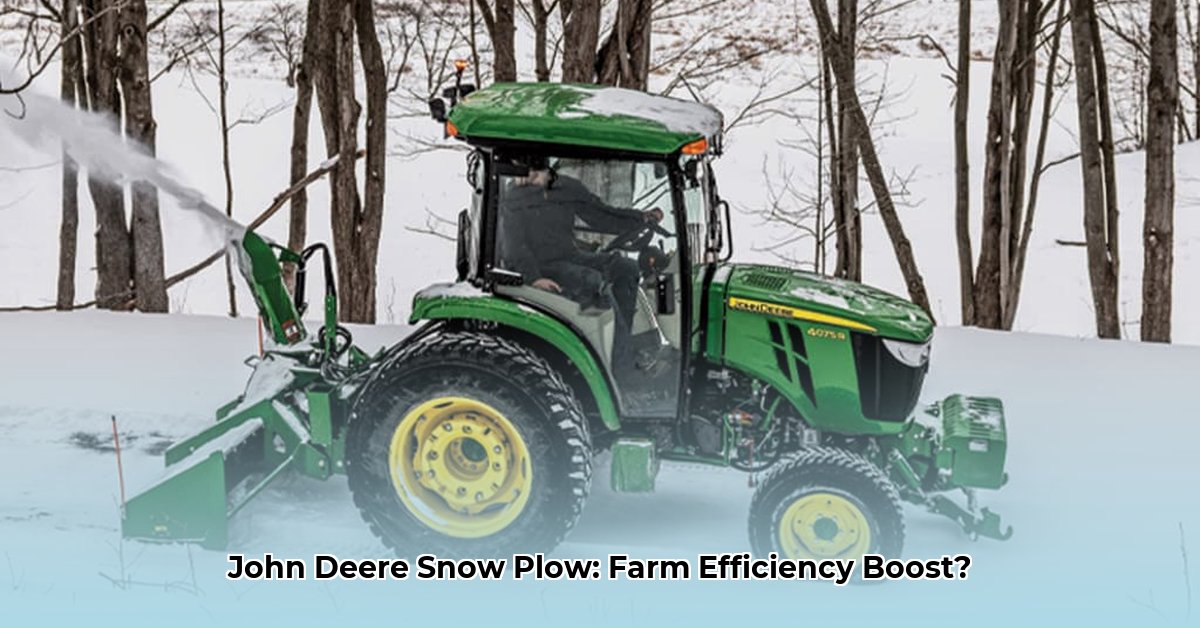
Winter's relentless snowfall can significantly impact farm productivity. Efficient snow removal is crucial for maintaining year-round operations and minimizing costly downtime. This guide helps you select the optimal John Deere snow plow attachment for your tractor, maximizing efficiency and minimizing environmental impact. For tractor maintenance, check out this helpful resource on fuel pump issues.
Assessing Your Snow Removal Needs
Before purchasing any snow plow attachment, carefully evaluate your specific needs. Consider these key factors:
Farm Size: The scale of your operation dictates the required equipment capacity. Small farms may only need a simple blade, while larger operations might require a powerful snow blower.
Annual Snowfall: The severity and frequency of snowfall in your region directly impact the necessary equipment's strength and efficiency. Heavier and more frequent snow necessitates more robust equipment.
Tractor Compatibility: Ensure the selected attachment is compatible with your John Deere tractor model. Consult your owner's manual or the John Deere website for compatibility information.
Budget: Establish a realistic budget encompassing the initial purchase price, ongoing maintenance, fuel costs, and potential repairs.
The following decision tree simplifies the selection process:
                                      Start
                                        |
                     Is your snowfall usually heavy and frequent?
                                        |  Yes
                                        |   No
                              -------------+-------------
                              |                     |
                    Heavy-duty snow blower     Light-duty blade or pusher
                              |                     |
              Can you afford a high-capacity blower?  |
                              |        Yes             | No
                              |                     |
                 High-capacity snow blower  Smaller blade or other solution
                              |
                 Best for large farms and heavy snow
John Deere Snow Removal Attachments: A Detailed Overview
John Deere provides various snow removal attachments, each with unique advantages and disadvantages. This section details popular options:
| Attachment Type | Pros | Cons | Ideal Application |
|---|---|---|---|
| Snow Blade | Cost-effective; versatile for various snow conditions; ease of use | Less efficient in deep snow; may require multiple passes; ineffective in icy conditions | Smaller farms; light to moderate snowfall; general-purpose snow removal. |
| Snow Blower | Highly efficient in deep snow; clears large areas quickly; handles heavy, wet snow | Higher initial cost; increased maintenance; more complex operation | Large farms; significant and frequent snowfall; efficient snow removal. |
| Snow Pusher | Simple operation; effective on packed snow; suitable for quick clearing tasks | Inefficient in deep or loose snow; less effective on icy surfaces | Clearing packed snow, smaller areas; quick clean-up jobs. |
Always refer to the John Deere website and your local dealer for detailed specifications and compatibility information for your tractor model. Videos and images illustrating each attachment's functionality are widely available online.
Matching Attachments to Your John Deere Tractor
Precise matching of attachments to your tractor model is paramount. Incorrect pairings can lead to equipment damage. Always consult your John Deere owner's manual or the official website. Retailers like Home Depot might offer compatibility information, but always verify with John Deere directly or through your authorized dealer.
Safe and Efficient Operation
Prioritizing safety is non-negotiable. Before operating any snow removal equipment, meticulously read and follow the manufacturer's instructions. Key safety measures include:
Pre-Operation Inspection: Thoroughly inspect both the attachment and tractor for any damage or loose parts. Address any issues before commencing operation.
Visibility: Ensure optimal visibility during operation. Avoid operating in low-light conditions or during severe weather unless absolutely necessary.
Controlled Speed: Maintain a safe and controlled speed, adapting to snow conditions and visibility. Avoid aggressive maneuvers.
Regular Maintenance: Regularly lubricate and inspect the attachment to maintain efficiency and longevity.
Sustainable Snow Removal Practices
Minimizing environmental impact is crucial. Sustainable practices include:
Minimizing Passes: Plan routes efficiently to reduce the number of passes required, conserving fuel and minimizing ground disturbance.
Correct Attachment Selection: Employ the most suitable attachment for the prevailing snow conditions, maximizing efficiency and minimizing fuel consumption.
Preventative Maintenance: Optimize engine performance through regular maintenance, reducing fuel wastage and extending equipment lifespan.
Lifecycle Cost Consideration: Evaluate the total cost of ownership, factoring in fuel, maintenance, repairs, and eventual replacements.
Cost-Benefit Analysis: Optimizing Your Investment
Before making a purchase, conduct a thorough cost-benefit analysis. Compare the following factors for each attachment option:
- Initial Purchase Price: The upfront cost varies significantly between attachments.
- Operating Costs: Fuel consumption is a major operating expense.
- Maintenance Costs: Regular maintenance impacts the overall cost.
- Lifespan: A longer-lasting attachment reduces long-term costs.
By carefully comparing these factors, you can identify the most cost-effective and efficient solution for your farm's needs. A well-maintained snow plow is a valuable investment, enhancing efficiency and productivity throughout winter.